
Home
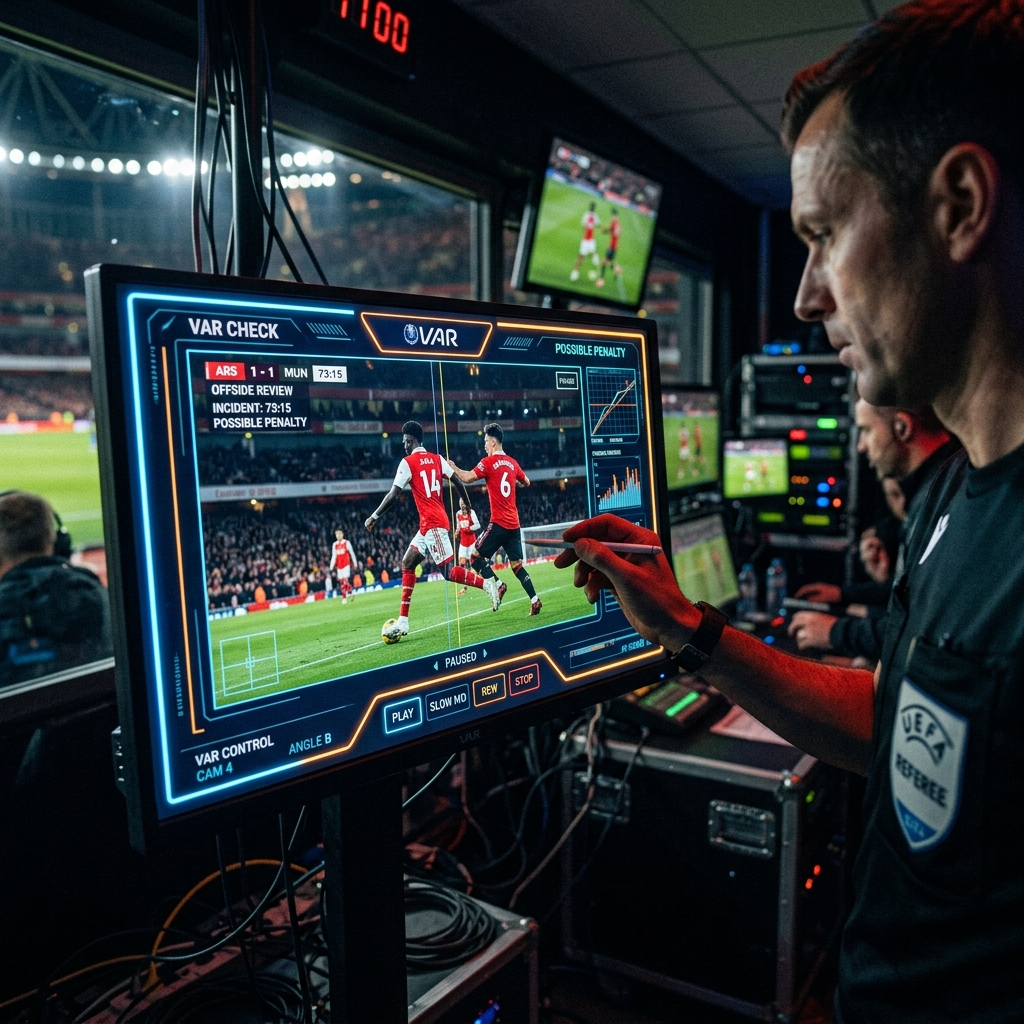
Even with all the tech, the 2026 World Cup still got it wrong sometimes. VAR, semiautomated offside, and goal line technology were all supposed to settle football's oldest argument, whether the officials got it right. The 2026 World Cup showed that technology only closes part of the gap. Fouls, penalties, and card decisions are still judgment calls, and judgment calls still went wrong, sparked outrage, and in one case pulled a sitting U.S. president into a football dispute. Saying FIFA has fully solved officiating would be a stretch.
Give credit where it's due. Clean goal line disputes are basically gone. Semiautomated offside has trimmed a lot of the guesswork out of tight calls at the back. Compared to tournaments a decade ago, some categories of error really have shrunk.
But offside lines and goal line sensors only answer factual questions. They can't tell a referee whether a challenge was a foul, whether contact in the box was enough for a penalty, or whether a shove deserves a card. Those calls stayed exactly as human, and exactly as contested, as they've always been.
This tournament had no shortage of moments fans are still arguing about. Harry Kane went down in the box against DR Congo in the round of 16, the referee waved off the appeal and hinted at simulation, and VAR backed the on field call anyway, a decision that left plenty of neutral viewers baffled. England had another penalty overturned on review in extra time of their quarter final against Norway, this time going the other way. Switzerland played most of their quarter final a man down after a second yellow call for simulation that many felt was harsh.
Egypt's manager was furious after his side's round of 16 exit to Argentina, publicly questioning whether the officiating had favored the bigger name, a claim FIFA's refereeing chief firmly denied, but one that stuck around in the conversation regardless. None of these calls needed better cameras. They needed a human being to make a judgment, and different people are always going to see contact, intent, and fairness differently.
The strangest storyline of the tournament wasn't even about a referee's eyesight. USMNT striker Folarin Balogun was sent off against Bosnia and Herzegovina, only for FIFA to suspend the resulting ban days later, clearing him to play against Belgium. FIFA said the decision came from its independent judicial bodies. It also came shortly after a phone call between U.S. President Donald Trump and FIFA president Gianni Infantino, in which Trump asked for the decision to be reviewed. UEFA called the reversal an improper outside influence on the process. FIFA maintained the two things weren't connected.
Whatever you make of it, that's not a story about camera angles or millimeter offsides. It's a reminder that a governing body's decisions can be shaped by more than what happens on the pitch, technology or not.
It wasn't just refereeing. FIFA's first ever World Cup final halftime show ran nearly twice as long as the break IFAB actually permits, and that limit only exists in the first place because extended breaks affect the players still on the clock. A political banner displayed by Argentina's players after their semi-final win put FIFA in the position of investigating its own tournament's biggest story two days before the final. None of it was a technology failure. It was FIFA making calls, under pressure, in real time, same as any referee.
Every World Cup brings fresh technology and fresh promises that it'll finally settle the arguments. This one proved, again, that technology narrows the target without eliminating it. Factual questions get answered cleanly now. Judgment questions don't, and probably can't, because judgment is exactly the part a camera can't do for you.
That's not a knock on the tournament. Some of the football was excellent, and Spain's run to the title deserves the credit it's getting. But claiming FIFA has fully cracked officiating fairness would be getting ahead of the evidence. The 2026 World Cup had a spectacular final and a genuinely great champion and it still argued about penalties, cards, and fairness right up until the last whistle.
If nothing else, it's a good reminder that even the most sophisticated system still needs a fair, unbiased way to make the final call. On a much smaller scale, that's exactly what a random shuffler does for your Sunday game, settle it fairly before the arguing starts, not after.